


System Conflict Prevention: Why Virtualenv is Mandatory in Python Infrastructure
Explore the critical role of Virtualenv in maintaining system integrity. Learn how isolated environments prevent library conflicts, ensure technical stability, and provide a secure foundation for scalable Python-based enterprise applications.
Index
Foundation: The Structural Necessity of Environment Isolation
Understanding the Global Package Conflict Problem
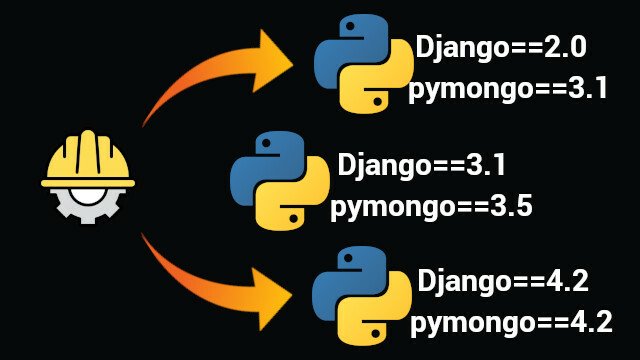
The foundation of a stable Python infrastructure is built on isolation. By default, Python installs packages into a global system directory. When multiple projects require different versions of the same library, "dependency hell" ensues. A Virtualenv acts as a structural boundary, creating a dedicated silo for each project's dependencies. This ensures that the technical base of one application never compromises the stability of another, maintaining the integrity of the entire Ubuntu server environment.
The Technical Architecture of a Virtual Environment
A Virtualenv is not a virtual machine; it is a clever manipulation of the system's search path. By creating a self-contained directory that includes its own Python executable and site-packages folder, it redefines the environment's PATH. This foundational setup allows developers to install packages without administrative privileges, ensuring that the system's core Python libraries remain untouched and pristine.
- Isolation of project-specific dependencies from the global system.
- Prevention of version collisions between different Python applications.
- Simplified management of complex library requirements.
- Protection of the operating system's core Python installation.
Value: Protecting Technical Assets and Reducing Operational Risk
Increasing Long-Term System Equity through Stability
In an enterprise context, system stability is a tangible asset. Using Virtualenv increases this "technical equity" by making deployments predictable. When you can guarantee that the production environment exactly matches the development environment, you reduce the risk of catastrophic failures. This reliability is a professional differentiator that signals technical maturity and protects the business's digital investments.
Enhancing Resource Efficiency and Developer Productivity
Value is created when developers spend less time troubleshooting environment issues and more time building features. Virtualenv allows for the rapid switching between project contexts without friction. By investing in this "clean" workflow, a company reduces the man-hours wasted on "fixing things that worked yesterday," directly improving the return on investment (ROI) for its technical team.
- Elimination of "It works on my machine" deployment errors.
- Streamlined onboarding for new developers via standardized environments.
- Easier audits of project dependencies and license compliance.
- Reducing the attack surface by minimizing unnecessary global packages.
Breakthrough: Strategic Workflows for High-Performance Scaling
Leveraging Requirements.txt for Breakthrough Portability
The real breakthrough in Python development comes from the combination of Virtualenv and dependency tracking. By utilizing pip freeze > requirements.txt, a business can "capture" a breakthrough state of its environment. This allows for instantaneous replication of the infrastructure across cloud instances, enabling the enterprise to sweep into new markets or scale its services with absolute precision.
Innovative Integration with CI/CD Pipelines
Virtualenv represents a breakthrough in automated testing and deployment. In a modern CI/CD pipeline, the system can automatically spin up an isolated environment, run tests against specific library versions, and tear it down—all without affecting the host runner. This level of innovative operation ensures that every update is verified in a "clean room" before reaching the end-user.
- Automated environment replication for rapid scaling.
- Integration with Docker for even deeper layer isolation.
- Using pip-tools for breakthrough dependency pinning and security.
- Simplified migration between different Python minor versions.
Market: Positioning Python Excellence in the Global Economy
Adapting to Global Standards in AI and Data Science
The global market for AI, Machine Learning, and Data Science is built on Python. Because these fields rely on highly sensitive and specific library versions (like TensorFlow or PyTorch), the use of Virtualenv is a non-negotiable international standard. Vietnamese enterprises that master these isolated workflows position themselves as credible players in the high-tech Asian corridor, ready to collaborate with global partners.
Competing through Technical Rigor and Compliance
In a competitive landscape, the "professionalism" of your tech stack matters. Clients and investors look for teams that follow industry best practices to mitigate risk. By mandating Virtualenv in your infrastructure, you align with global security and operational standards, providing a competitive edge during technical due diligence for international contracts.
- Aligning with international Python packaging standards (PEP 405).
- Thriving in the high-growth niche of professional Python consultancy.
- Meeting the rigorous deployment demands of global tech giants.
- Attracting top-tier talent by offering a modern, clean development workflow.
Objective: Defining Success through Zero-Conflict Operations
Aligning Environment Stability with Growth KPIs
The objective of mandating Virtualenv is to achieve a 0% rate of cross-project library conflicts. Success is measured by the speed of deployment and the absence of environment-related downtime. By aligning these technical metrics with corporate Key Performance Indicators (KPIs), the IT department ensures that the infrastructure serves the company's broader strategic roadmap without being a bottleneck.
Achieving Long-Term Sustainability and System Longevity
The ultimate goal is to build a Python ecosystem that remains maintainable for decades. Virtualenv ensures that an application built today can still run five years from now, even as the global Python ecosystem evolves. Success is defined by having a scalable, sustainable, and "future-proof" infrastructure that can adapt to the 30-year vision of the enterprise.
- Maintaining 100% environment consistency across all stages (Dev, Test, Prod).
- Achieving standardized deployment times for new microservices.
- Building a resilient technical architecture that survives library deprecations.
- Reducing technical debt through rigorous dependency management.
Operation: Systematizing Environment Management (SOP)
Implementing Standard Operating Procedures for Environment Setup
Operational excellence is achieved through discipline. We implement Standard Operating Procedures (SOPs) that make the creation of a Virtualenv the very first step of every project. This includes standardized naming conventions, the use of pyenv for version management, and automated scripts for environment activation. By systematizing this behavior, the "Technical Flywheel" remains optimized and free of friction.
Collaborative Oversight and Continuous Optimization
Efficient operation requires a continuous feedback loop between developers and system administrators. By using tools like Pipenv or Poetry, teams can collaboratively manage lockfiles to ensure that everyone is working in the exact same environment. This operational rigor ensures that the production system remains a perfect reflection of the development intent, delivering peak performance at all times.
- Mandatory use of .gitignore for environment directories.
- Regular QA audits of requirements.txt and lock files.
- Automating environment setup in local development playbooks.
- Continuous training on advanced Python environment management tools.